News
Two Thai hotels have made the world's top 3: what’s behind this achievement

In The 50 Best Hotels 2026 ranking, two Bangkok hotels have secured spots in the global top three. Capella Bangkok took second place, while Four Seasons Bangkok at Chao Phraya River came in third. For the second year in a row, the top spot went to Rosewood Hong Kong. Another Bangkok hotel, Mandarin Oriental Bangkok, ranked tenth.
This is a significant achievement for Thailand. But it’s not just the ranking itself that’s interesting; it clearly illustrates how the perception of Thai hospitality is evolving. The country is increasingly competing not only with its beaches, nature, and traditional culture, but also with hotels that seamlessly blend architecture, gastronomy, wellness, and service.
In this article:
- Why The 50 Best Hotels matters
- What makes Capella Bangkok special
- Why Four Seasons Bangkok feels more like a resort than a city hotel
- When a hotel becomes part of the city
- Thailand bets on the quality of the experience
- What this new success says about modern Thailand
Why The 50 Best Hotels matters
The 50 Best Hotels is not a traditional rating system where hotels earn points for a specific set of amenities. The ranking is based on votes from an international academy of over 800 hospitality and travel industry experts. That is precisely why Bangkok’s result is so compelling.
In 2026, the results were announced on September 15 in Paris. Three hotels from the Thai capital made it into the top ten: Capella Bangkok at number two, Four Seasons Bangkok at Chao Phraya River at number three, and Mandarin Oriental Bangkok at number ten. In total, four Bangkok hotels are represented in the global top 50, including Aman Nai Lert at number 48.
This is no longer just a one-off success for a single famous brand. Rather, it is a sign that Bangkok has cultivated an environment where multiple hotels are capable of competing for the attention of the most seasoned travelers.
What makes Capella Bangkok special
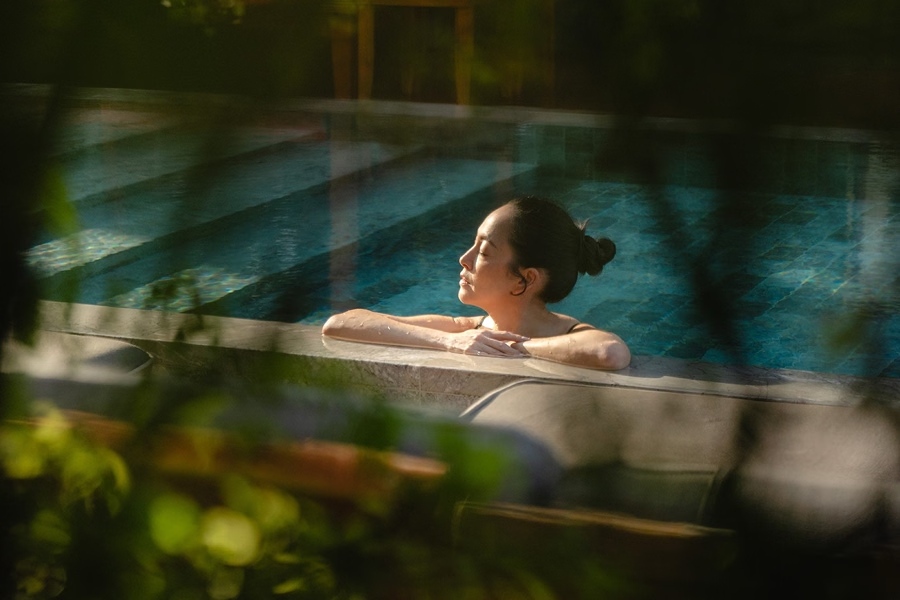
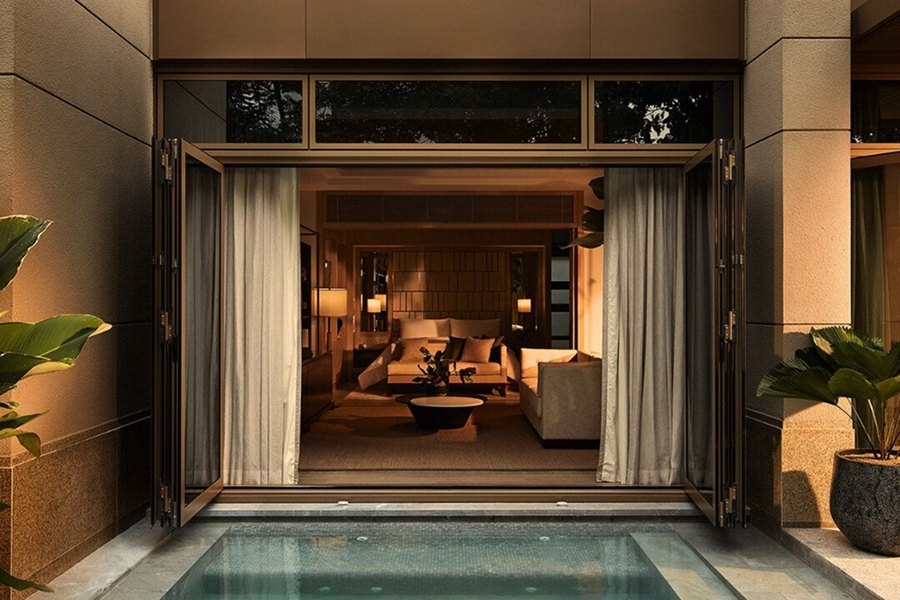
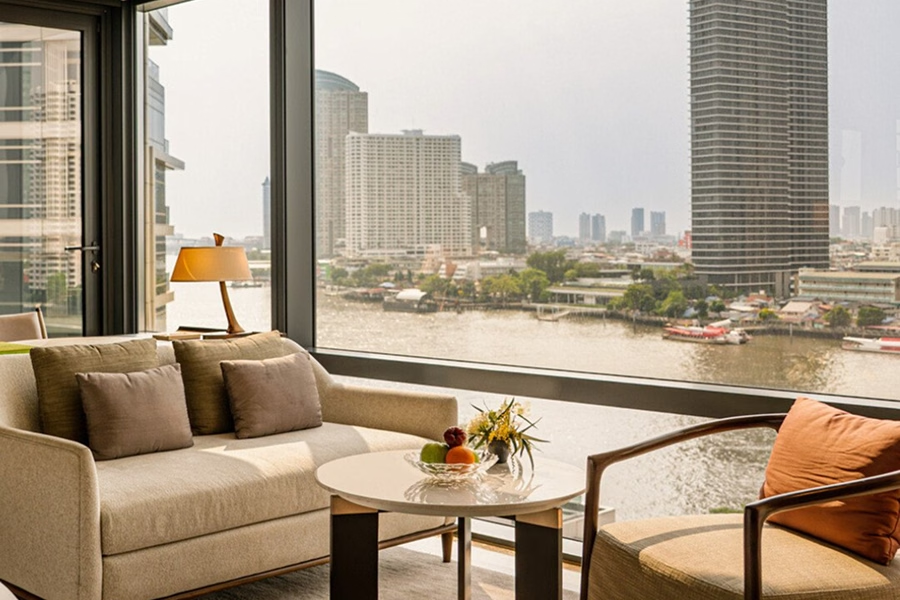
Capella Bangkok ranked second in the world. The hotel features just 101 rooms, suites, and villas, each with a river view. Its low-rise architecture, expansive open spaces, and serene color palette create the feel of a private residence rather than a large city hotel.
This is especially evident in the rooms. Even the entry-level categories start at approximately 61 square meters and include private outdoor lounge areas. The hotel also offers seven riverside villas, some with their own plunge pools.
But one of the most interesting features of Capella is how it maintains a connection to the city and Thai culture. Instead of creating a completely generic international interior, the hotel constantly brings guests back to Bangkok and Thailand. This is reflected in the gastronomy, design, and even the staff's service.
The restaurant Phra Nakhon focuses on traditional Thai cuisine using local ingredients. Meanwhile, Côte by Mauro Colagreco offers a modern interpretation of French and Italian Riviera cuisine by Mauro Colagreco, a three-Michelin-starred chef. Côte currently holds two Michelin stars.
Even the name of the district matters here. Capella is located in Charoenkrung, one of Bangkok's historic areas, where old streets, shops, and a traditional urban environment are preserved alongside modern hotels and restaurants.
It is this combination of inner tranquility and the authentic Bangkok experience just outside the hotel that has made Capella a perennial fixture on the list of the world's best hotels. In 2024, it held the top spot in the same ranking.
Why Four Seasons Bangkok feels more like a resort than a city hotel
While Capella is built around intimacy, Four Seasons Bangkok at Chao Phraya River operates on an entirely different scale.
The hotel features 299 rooms and suites, yet thanks to its cascading architecture, courtyards, gardens, and abundance of open spaces, it doesn't feel like a typical large city hotel.
The architecture here is literally built around the concept of water. Spaces flow seamlessly into one another, and the river becomes an extension of the interior.
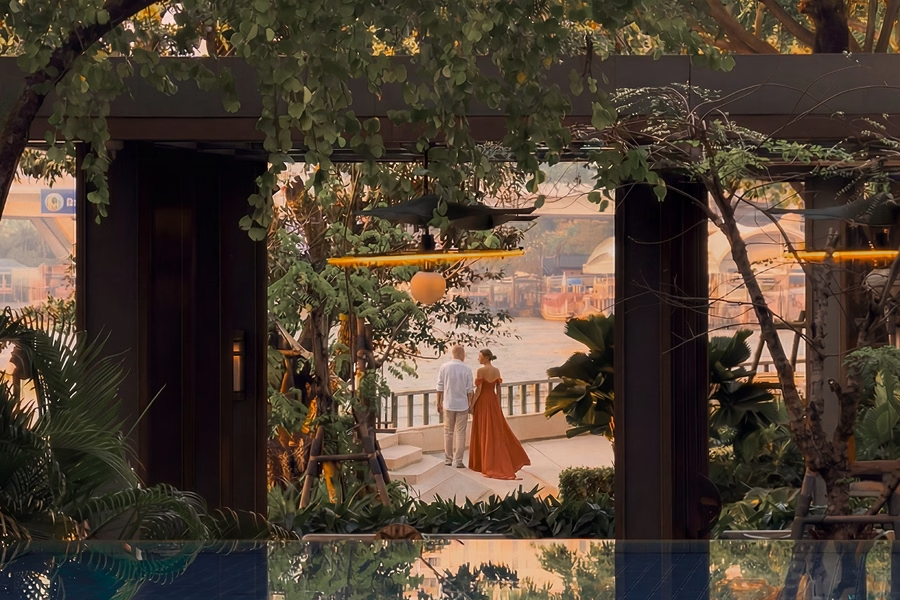
The art deserves special mention. The public spaces showcase works by Thai artists, and the hotel itself focuses on blending modern architecture with local cultural details.
Dining here is another essential part of the hotel experience. Yu Ting Yuan specializes in Cantonese cuisine, Riva del Fiume offers Italian dishes by the river, and Brasserie Palmier focuses on French classics. It is also worth noting the BKK Social Club, a Latin American-inspired bar that ranked 20th on the Asia's 50 Best Bars 2026 list.
In 2026, Four Seasons was awarded two Michelin Keys for the third consecutive year. This Michelin system evaluates the overall hotel experience rather than just a single restaurant, taking into account design, service, character, and the overall impression of the stay.
It creates an interesting contrast: one hotel focuses on intimacy and tranquility, while the other emphasizes scale, architecture, and a variety of experiences. Yet both achieve the same goal: allowing guests to experience Bangkok without being overwhelmed by its intensity.
When a hotel becomes part of the city
This is where one of the most interesting features of the new generation of hospitality emerges. Previously, a good city hotel could be seen as an island of sorts: comfort inside, the city outside. Today, that approach is changing—the best hotels strive not to separate the guest from the city, but rather to become a gateway for exploring it.
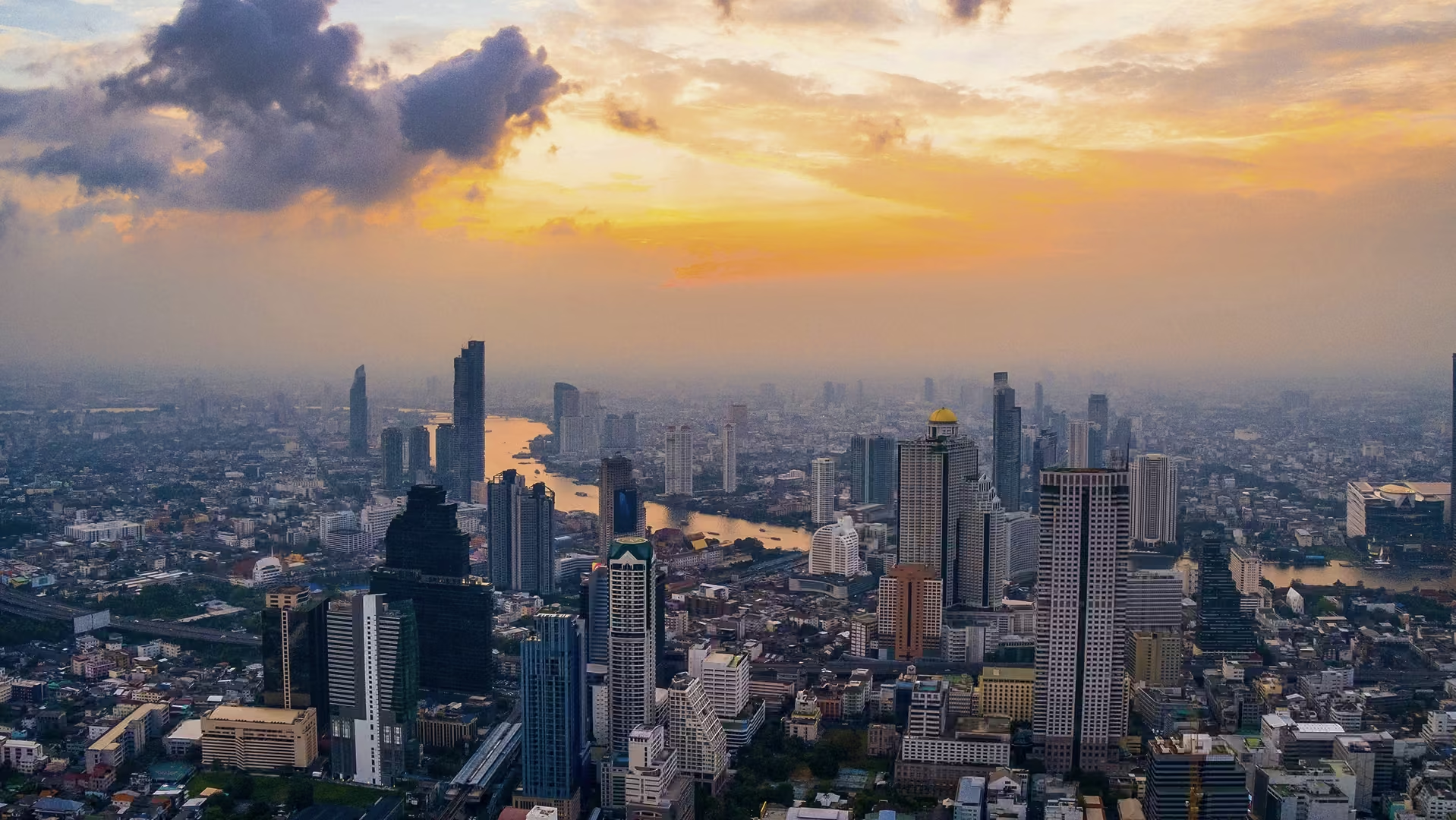
Both Capella and Four Seasons are located in the Charoenkrung district, where historic Bangkok gradually intertwines with new gastronomy, art, design, and modern urban culture.
You can spend the morning by the river, head out to explore the old streets during the day, and return to the hotel for dinner in the evening. Even getting around the city becomes part of the experience: Four Seasons, for example, offers guests the chance to travel along the river by boat.
This is one of Bangkok's greatest strengths as a destination. The city doesn't try to be a resort. It remains a vast, bustling, vibrant metropolis, but the best hotels have learned to create their own, more tranquil rhythm within it.
Thailand bets on the quality of the experience
In 2026, the TAT (Tourism Authority of Thailand) continues its strategy of Value over Volume, focusing on high-quality tourism, gastronomy, and local culture.
Thailand has long known how to host large numbers of tourists, but the next stage is to give them more reasons to stay longer, return more often, and view the country as a destination for a wide variety of travel scenarios.
Today, the hotel industry is becoming one of the primary tools for this. A traveler might come to Thailand for wellness, gastronomy, art, sports, nature, or simply the opportunity to spend a few days in a well-curated environment. In its 2026 strategy, the TAT specifically highlights wellness, gastronomy, local communities, and niche sectors such as sports, yachting, cruises, and creative communities.
It’s not just Bangkok that’s evolving. The 50 Best Hotels 2026 list features 18 hotels from Asia, and Thailand is represented not only by four Bangkok properties but also by other destinations across the country in the broader rankings.
What this new success says about modern Thailand
Two spots in the global top three belong to specific hotels and their teams. But behind this result lies a broader trend.
Thailand is gradually moving away from its image as a destination for sun, sea, and budget travel toward a more sophisticated and diverse tourism offering. It is particularly telling that Bangkok has become the epicenter of this shift. Today, the city seamlessly blends historic districts, modern architecture, world-class dining, and a robust hospitality industry.
For travelers, this is great news. Thailand is becoming a country that is exciting to rediscover, even if you have visited many times before. And judging by the attention its hotels, gastronomy, and culture are receiving, this momentum is only accelerating.
Text: milena blum