Overview
Buying Property in Phuket: How to Vet a Project and Minimize Risks
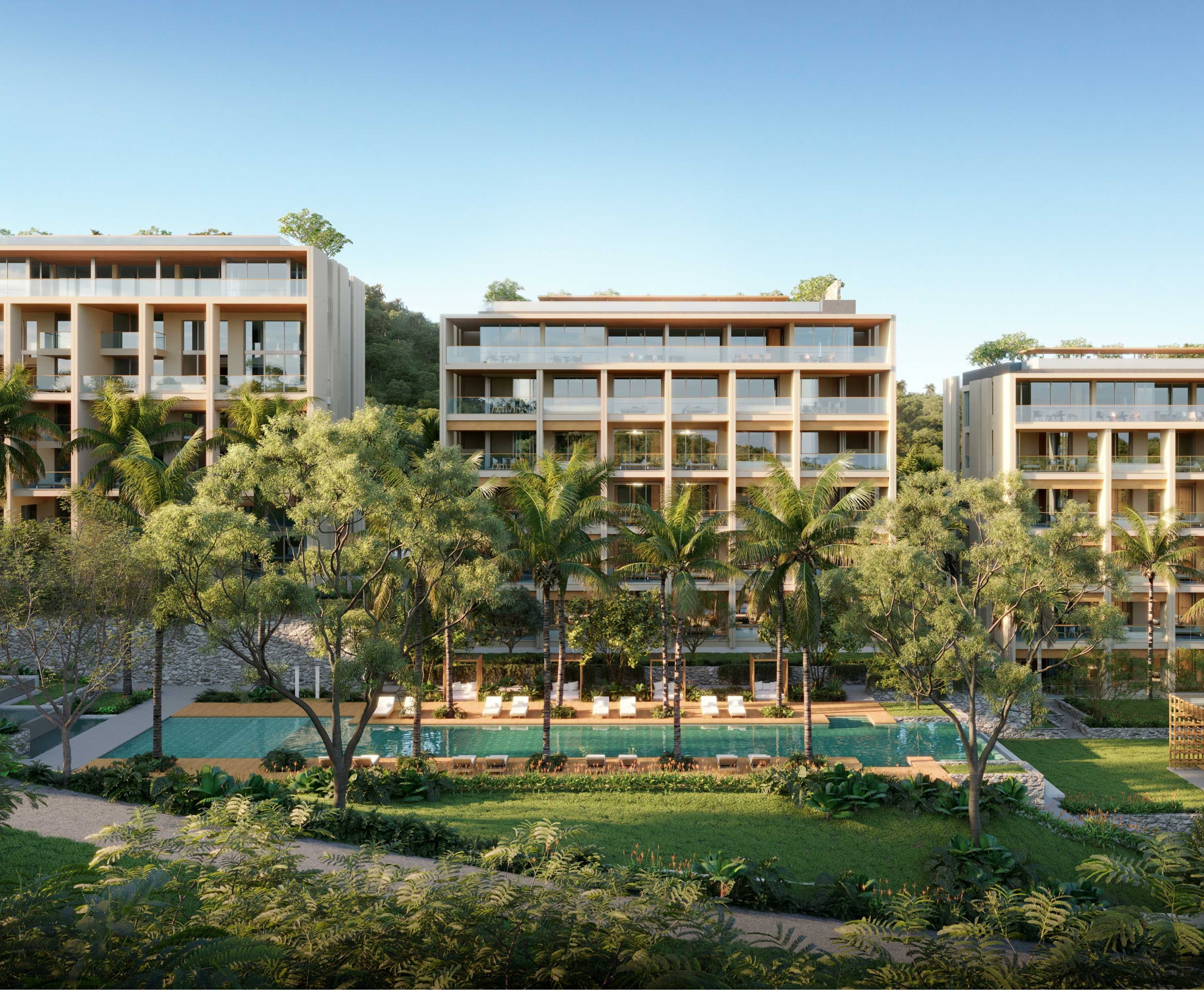
Buying property off-plan allows you to select a unit before the project is completed, take advantage of installment plans, and lock in purchase terms in advance. However, along with these benefits, the buyer assumes risks related to construction timelines, the developer's financial health, and the legal registration of the property.
We explain how to vet a real estate project in Phuket, which documents to pay attention to, the differences between buying an apartment and a villa, and what factors to evaluate before making your first payment.
In this article
- Where to start when vetting a real estate project
- How to research a company's legal and financial history
- What you can learn from completed projects
- What permits are required for construction
- How to check the land for a future development
- Differences between vetting an apartment and a villa
- How to evaluate financing and payment schedules
- What happens after construction is completed
- How a professional agency helps reduce purchase risks

Where to start when vetting a real estate project
Once you have selected a suitable project, it is important to assess its feasibility. Architectural renderings, floor plans, and descriptions of future amenities help you visualize the complex, but they do not confirm that the necessary permits are in place, that there is sufficient funding, or that the property can be transferred to buyers under the stated terms.
First and foremost, you should look at the legal status of the land, the approved documentation, the stage of construction, and the ownership terms. For example, the land might be mortgaged to a bank, part of the infrastructure might belong to a third party, and the actual realization of the project might depend on future sales.
The company responsible for the construction and sale of the property deserves special attention. Even if a developer is already well-known in the market, a new complex may be managed through a separate legal entity with its own financial structure and obligations.
Therefore, a comprehensive check combines two areas: evaluating the project itself and analyzing the developer. Only together do they provide a more objective picture of the risks involved in your future purchase.
How to check a developer's legal and financial history
The first step is to determine which company is directly selling the property and is responsible for the construction.
In Thailand, information about legal entities is available through the Department of Business Development (DBD). In the official service DBD DataWarehouse+ you can find registration information, details on directors, shareholders, registered capital, and financial statements.
Start with the company's exact legal name and registration number. When reviewing the information, it is important to pay attention to the registration date, shareholder composition, and financial results. If a developer presents itself as part of a large development group, this connection must be verified through the corporate structure and official documents.
At the same time, a young company does not necessarily indicate increased risk. In development, it is common practice to create a separate legal entity for a specific project.
Registered capital should also not be viewed as direct proof of the ability to complete construction. It is not equal to the amount of cash in bank accounts and does not show what volume of funding is actually available to the project.
DBD specifically warns that registration details confirm the existence of a legal entity but do not serve as independent proof of its reliability for financial transactions.
What you can learn from a developer's completed projects
The history of completed properties helps to evaluate the company's performance, which cannot be seen in a presentation of a new complex.
It is worth examining which projects the developer has already completed, when they were handed over to buyers, and how closely the final execution matches the original plans.
It is especially useful to visit properties that have been in operation for several years. In new buildings, finishes and public spaces usually look good, but it is only over time that the quality of engineering systems, waterproofing, facades, and site maintenance becomes apparent.
The level of management after construction is completed is equally telling. Are common areas kept in good condition, how quickly are defects addressed, and are maintenance costs transparent to owners?
If a developer does not yet have any completed projects, you will have to evaluate primarily the experience of their team, their financial structure, and the reliability of their contractors. A lack of construction history does not in itself mean that a project should not be considered, but it does limit the possibilities for independent quality verification.
What permits are required for construction in Phuket
Having a plot of land and a finished architectural design does not mean that construction can be carried out as proposed.
In Thailand, development is regulated by land use requirements, building codes, and environmental legislation. To verify a project, it is necessary to determine which permits apply to the specific property and whether the actual project characteristics comply with them.
Building Permit
A building permit is issued by the authorized government agency in accordance with applicable regulations.
When checking, it is important to compare the documentation with what the developer is offering: the building's purpose, number of floors, layout of the buildings, and other essential characteristics.
EIA Environmental Impact Assessment
EIA (Environmental Impact Assessment) is a procedure for evaluating a project's impact on the environment. In Thailand, it is mandatory for certain categories of real estate depending on the scale, purpose, and location of the property.
For example, an EIA is required for certain residential and hotel projects with 80 or more units or a usable area of 4,000 m² or more. Additional environmental restrictions may apply to specific areas.
If a developer claims that an EIA has been approved, you should request supporting documentation and verify the project's status through the government system Smart EIA Plus. It is important to distinguish between submitting documents for review and receiving final approval.
How to check the land for a future development
Land rights are one of the most critical issues when purchasing real estate during the construction phase.
In Thailand, land documents have different legal characteristics. To verify a property, it is necessary to determine the type of land title, the owner of the plot, and any registered restrictions.
One of the most definitive types of land documents is the Chanote, or Nor Sor 4 Jor. It is used to register land ownership, but even having such a title does not eliminate the need for further due diligence.
A lawyer must determine who owns the plot, whether its location matches the declared project, and if there are any registered encumbrances.
Special attention is required when a land plot is mortgaged to a bank. However, a bank encumbrance does not in itself make a project unreliable: developers often use credit financing for construction.
Information about rights and registered restrictions is verified through the relevant branch of the Department of Lands. Verification must take into account not only the copy of the document provided by the seller but also the current registration data.
How checking an apartment differs from checking a villa
Purchasing a condominium apartment and buying a villa in Thailand may involve different legal models. This is especially important for foreign buyers.
Condominium apartments
Foreign citizens, provided they meet the conditions established by law, can purchase apartments in registered condominiums as freehold. However, there is a limit on foreign ownership: it must not exceed 49% of the total area of the condominium units eligible for the corresponding quota.
If a property is being sold during the construction phase, it is also necessary to find out how the subsequent registration of the condominium and the transfer of ownership will be carried out.
Villas and land plots
When buying a villa in Thailand, it is necessary to consider the ownership of the building and the rights to the land plot separately.
One common model for foreign buyers involves registering the villa as freehold and the land beneath it as leasehold. This is because foreign individuals, with few exceptions provided by law, cannot own land in Thailand.
Under this model, the buyer can own the building itself, while the right to use the land is determined by a lease agreement. The possibility of separate ownership must be properly documented and confirmed by the relevant paperwork.
Special attention should be paid to the land lease term, the registration procedure, and the conditions for renewal and transfer of rights to third parties. For villa complexes, it is also important to check the rights to common roads, utility networks, and other infrastructure. These factors affect the ability to fully utilize the property after purchase.
How to assess the financial stability of a project
Even an experienced developer can face delays if the project's financing is not structured sustainably.
Construction can be funded through the developer's own capital, bank loans, sales revenue, or a combination of several sources.
It is useful for a buyer to find out which stages of construction have already been funded and to what extent the project's completion depends on future sales.
Why the payment schedule matters
Installment plans are common in Phuket, allowing buyers to pay for property in several installments as construction progresses. However, there is no single, standardized schedule for all projects. Payment proportions depend on the contract, the stage of construction, and commercial terms.
The link between payments and specific construction milestones is crucial. It is advisable to have a clear, pre-defined process for verifying these milestones.
For instance, a buyer should understand what event constitutes the completion of a specific construction stage and who is responsible for confirming it. It is also necessary to separately assess the consequences of delays or project suspension.
Is an escrow account necessary?
Escrow is a settlement mechanism involving an independent intermediary who holds funds and releases them only when agreed-upon conditions are met.
In Thailand, this mechanism is provided for by the Escrow Act B.E. 2551 (2008), but participation is voluntary. Consequently, the absence of an escrow account does not imply a violation of the law or that a transaction is automatically high-risk.
If a developer offers escrow, it is worth clarifying who the intermediary is, the conditions under which funds are released, and what events allow the buyer to request a refund.
If payments are made directly, it is especially important to evaluate the contractual terms, the payment schedule, and the company's financial standing.
What happens after construction is completed
When choosing property, buyers often focus more on architecture and completion dates than on the future maintenance of the complex. However, once the property is handed over, ongoing expenses and obligations arise that can significantly impact the comfort of ownership and the investment's economics.
For condominiums, it is necessary to clarify the estimated common area maintenance fees, the size of the sinking fund, and the procedures for managing common property. For villa complexes, agreements regarding the maintenance of roads, security, landscaping, engineering infrastructure, and other shared facilities are essential.
Rental management is a separate issue. If a developer offers a rental yield program, it is necessary to understand who the operator will be, how revenue is distributed, and what expenses the owner is responsible for.
This is why a project assessment must include the period after construction is finished. A property may be well-built but prove inconvenient or expensive to operate.

How a professional agency helps reduce purchase risks
Checking property in Phuket requires attention to many details: from the legal status of the land plot and building permits to the developer's financial stability, contract terms, and future maintenance costs. Some information is available in public registries, while other details must be requested directly from the developer and analyzed in the context of Thai law.
Navigating all these nuances on your own can be difficult, especially for buyers located outside of Thailand who are encountering the local market for the first time. This is where the experience of a professional real estate agency plays a vital role. Knowledge of the market, developers, and completed projects helps to gather available information more quickly, identify potential issues, and determine which areas require additional legal or technical due diligence.
At Vanderhouse, we begin this work at the property selection stage. We analyze projects, study developer reputations, and evaluate location, construction quality, infrastructure, and purchase terms. We compare property characteristics with the client's goals and highlight any limitations that could affect future ownership or the investment appeal of the property.
When preparing for a transaction, we help obtain the necessary documents, organize independent legal due diligence, and negotiate purchase terms. This approach allows the client to make decisions based on more complete and objective information, with a clear understanding of the chosen project's benefits, potential risks, and the obligations associated with the purchase.
Text: milena blum